
Table of Contents
Finding a yoga class is easy. Finding a class you can actually stick with — and feel safe and supported in — is harder. That’s why searches for women-focused yoga programs have grown steadily across Chennai. Women want classes that fit real life: work schedules, family responsibilities, stress levels, and varying fitness backgrounds.
When people search for the best yoga classes for women, they are usually looking for more than a “good studio.” They want a class where the teacher is experienced, the pace is beginner-friendly, the environment is comfortable, and the teaching style is safe. Some women prefer women-only batches, while others want mixed classes with a respectful culture. Many want options that include online sessions for flexibility.
This guide breaks down what “best” really means in a Chennai context. It covers class formats, yoga styles, typical fees, and how to choose a program based on your goals — without exaggerated wellness claims or promotional tone.
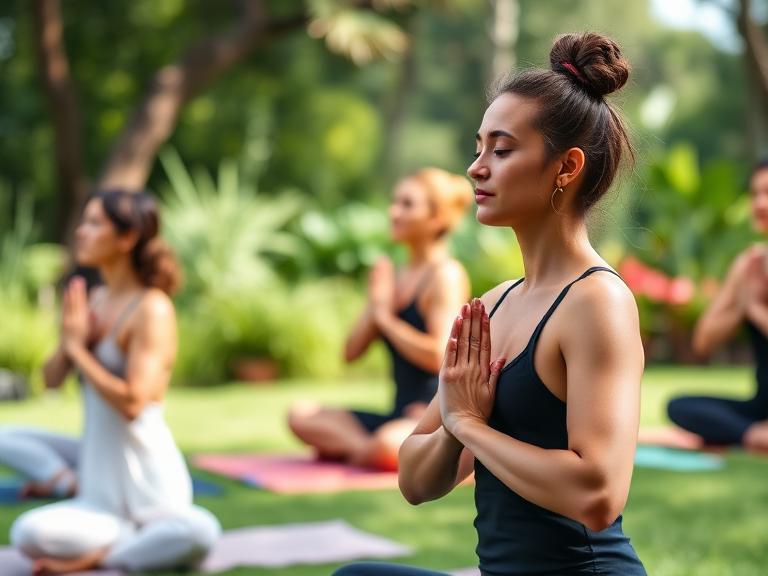
The best yoga classes for women in Chennai are typically the ones that offer safe posture instruction, clear modifications, a calm pace, and a consistent structure that supports beginners and regular practitioners. Women in Chennai can choose between studio-based classes, outdoor group sessions, and online programs depending on comfort, schedule, and travel time. In Chennai, options such as Outdoor Yoga Chennai offer structured outdoor and online yoga sessions for different needs. The right class should feel supportive rather than competitive, with instructors who prioritise alignment, breathwork, and gradual progress.
Yoga has always been present in Chennai’s wellness culture, but modern demand is shaped by everyday realities.
Many women juggle:
- Work deadlines
- Family responsibilities
- Commutes and traffic
- Screen fatigue
- Sleep disruption
Yoga is increasingly chosen because it provides a calmer, sustainable routine.
Long hours of sitting contribute to:
- Neck and shoulder tightness
- Lower back discomfort
- Hip stiffness
- Reduced mobility
A well-taught yoga class supports posture awareness and flexibility in a safe way.
Women often look for movement that is:
- Joint-friendly
- Sustainable long-term
- Not aggressive or punishing
Yoga fits well when taught responsibly.
The word “best” can be misleading. It doesn’t always mean the most expensive studio or the most popular Instagram teacher.
In practical terms, the best yoga classes for women usually share these qualities:
- Clear instruction and safe alignment cues
- Beginner-friendly pacing and modifications
- Consistent class structure (not random sequences)
- Respectful environment and supportive group culture
- Options for women at different levels (beginner, regular, gentle)
- Breathwork and relaxation included regularly
If a class is fast, intense, or competitive, it may not be the best fit for most women — especially beginners.
Women have different goals, and the best class depends on what you want.
Hatha yoga is widely considered one of the safest starting points. It focuses on:
- Slow posture practice
- Alignment
- Breath awareness
- Steady progression
For many women, beginner Hatha is the foundation for long-term practice.
Gentle flow is ideal for women who want:
- More movement
- Better stamina
- A routine-like experience
It usually includes modified sun salutations, mobility work, and balance.
Restorative yoga is not “easy yoga.” It is structured relaxation. Women often choose it for:
- Stress recovery
- Better sleep habits
- Nervous system calm
It is especially useful for women with high mental fatigue.
Some women prefer yoga mainly for:
- Breath training
- Mental calm
- Emotional regulation
A well-designed class will keep pranayama simple and safe.
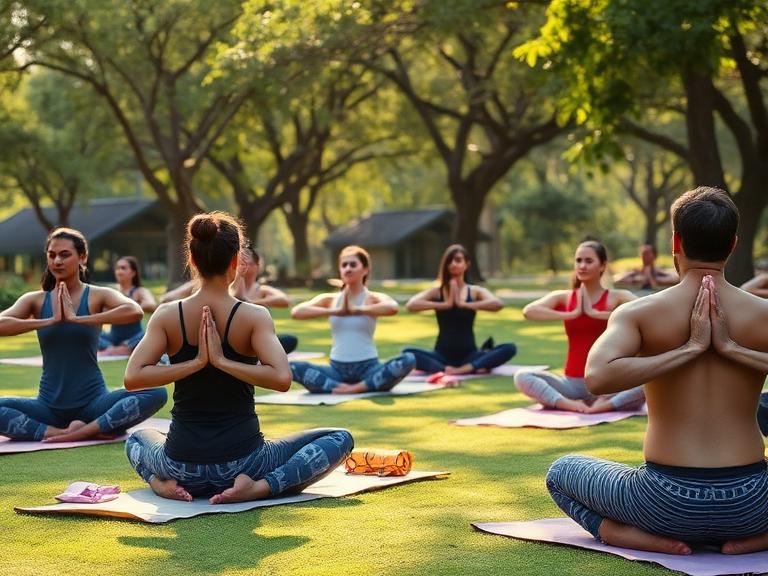
Outdoor yoga is growing in Chennai, especially for women who want:
- Open-air practice
- Spacious group sessions
- A calmer environment than indoor studios
Providers like Outdoor Yoga Chennai offer outdoor formats that can suit women who enjoy morning practice.
Online yoga is ideal for women who:
- Have limited time
- Prefer privacy
- Want flexible schedules
- Travel often
Online programs work best when the teaching is structured and beginner-friendly.
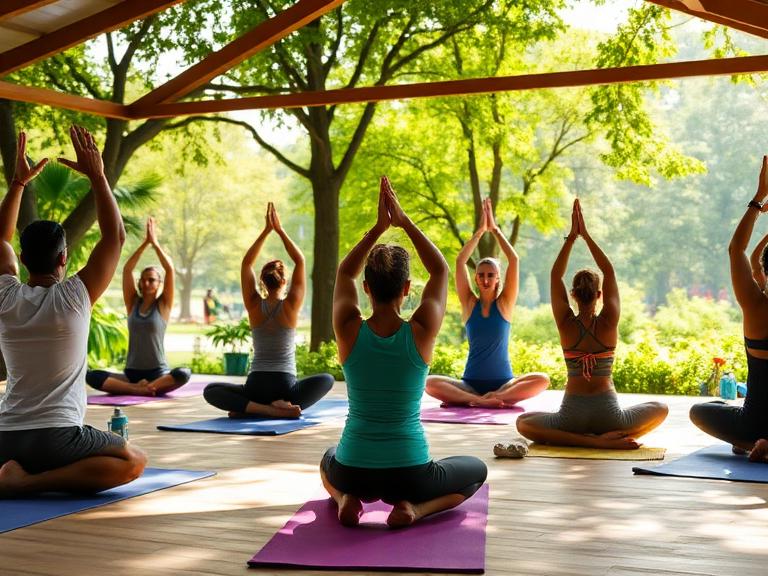
This depends on your personality, schedule, and comfort.
- You want in-person correction
- You’re learning alignment
- You prefer a dedicated wellness space
- You enjoy fresh air
- You want spacious practice
- You like group energy without crowded rooms
- You want privacy
- You want consistency without commuting
- You need flexible timing
Many women do best with a hybrid approach:
- Online during weekdays
- Outdoor or studio sessions on weekends
If you want to find the best yoga classes for women, focus on quality indicators rather than branding.
A good instructor:
- Explains clearly
- Demonstrates safely
- Offers modifications
- Encourages rest
- Avoids pushing flexibility
A reliable class usually follows:
- Warm-up
- Main sequence
- Cool-down
- Shavasana (relaxation)
The class should:
- Avoid rushing
- Offer alternatives
- Encourage gradual progress
Smaller batches are often better for:
- Personal attention
- Posture correction
- Beginner confidence
The best classes feel:
- Calm
- Respectful
- Supportive
Women should feel comfortable asking questions.
Yoga works when you can attend regularly. Choose a class that fits your routine.
Yoga is for everyone, but women-focused classes are especially helpful for:
Yoga helps reduce stiffness and stress from long workdays.
A supportive yoga class is a gentle way to restart movement.
Many women want a safe, slow-paced entry into fitness.
Gentle yoga improves mobility and balance when taught responsibly.
Breathwork and relaxation can support calmer daily functioning.
Even women who love yoga sometimes stop due to avoidable issues.
Fast flow classes can overwhelm beginners.
Women-only or beginner-friendly groups can help.
Online yoga can help when schedules are unpredictable.
Yoga progress is gradual. Most benefits come from 6–12 weeks of consistent practice.
If you don’t feel guided, switch programs.
Pricing varies widely depending on location, batch size, and studio reputation.
- ₹1,500 to ₹3,500 per month is common
- Premium studios may be ₹4,000 to ₹8,000 per month
- Often ₹1,500 to ₹3,500 per month
- Some community groups may be lower
- ₹800 to ₹2,500 per month for group sessions
- ₹500 to ₹1,500 per session depending on experience
The best value is usually a well-structured group class with consistent teaching.
A realistic schedule matters more than an ambitious one.
- 2–3 classes per week
- 3–4 classes per week
- 2 classes weekly + 1 short home practice
Even 20 minutes at home on non-class days helps build consistency.
Choosing the format is not about which is “better.” It’s about what fits your life.
- You have limited time
- You want privacy
- You want consistency without travel
- You want fresh air
- You enjoy group routines
- You want spacious practice
Some programs offer both formats, which can suit women who want flexibility.
The best classes are usually those with qualified instructors, beginner-friendly pacing, clear modifications, and a calm environment that supports consistency.
Not always. Women-only classes often feel more comfortable for beginners, but mixed classes can be excellent if the culture is respectful and the instructor is experienced.
Hatha yoga and gentle flow are typically the best starting points.
Yes. Evening batches and online programs are widely available.
Most group classes range from ₹1,500 to ₹3,500 per month. Online programs are often cheaper.
Yes, especially when classes are structured and taught clearly with modifications.
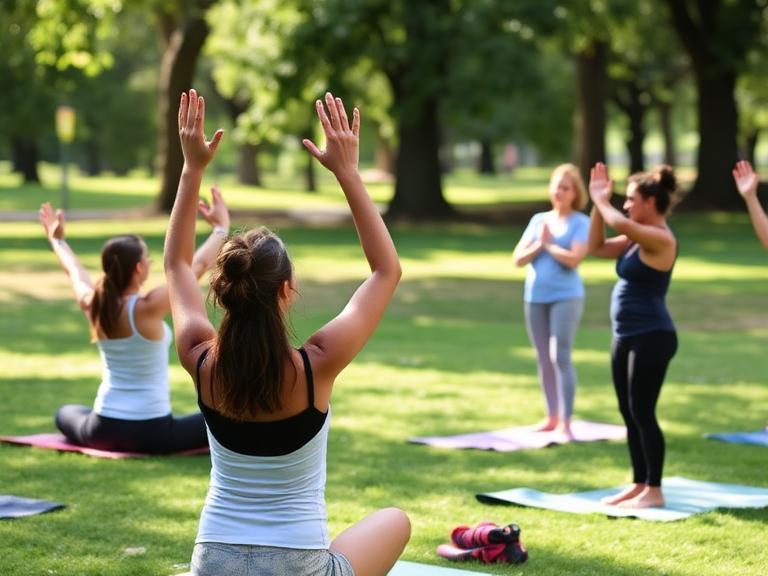
Yes. Outdoor yoga is increasingly common in parks and open spaces.
2–4 days per week is a realistic and effective schedule for most women.
A yoga mat, towel, water bottle, and comfortable clothing.
Yes. Many programs offer gentle yoga suitable for seniors.
Many do. Some classes include pranayama and relaxation as part of the session.
Many women notice reduced stiffness and improved calm within a few weeks of consistent practice.
Avoid pushing flexibility, rushing through postures, and ignoring discomfort.
Yes. Flexibility improves gradually through practice.
Look for instructor experience, class structure, beginner support, timing convenience, and a calm learning environment.
