
Table of Contents
In the fast-paced world of international trade, the decision between air freight and sea freight in Dubai is the most significant factor affecting your bottom line. As Dubai cements its position as a “Multimodal Hub” under the D33 economic agenda, the lines between these two modes are blurring, but the strategic choice remains vital.
For businesses looking to optimize their reach, Nautical Gulf provides this definitive 2025 guide to help you navigate the costs, speeds, and logistical nuances of shipping from the heart of the UAE.
In 2025, speed is no longer just a luxury—it’s a competitive requirement. Dubai’s infrastructure allows for unprecedented transit speeds in both sectors.
- Transit Time: Typically 1 to 5 business days globally.
- Connectivity: Utilizing Dubai International (DXB) and Al Maktoum International (DWC), air cargo companies in Dubai offer direct “Next-Flight-Out” services to major capitals.
- Best For: Perishables, pharmaceuticals, high-fashion, and urgent electronics.
- Transit Time: 15 to 45 days, depending on the destination port.
- Connectivity: Jebel Ali Port, the most productive port in the Middle East, serves as the primary exit point.
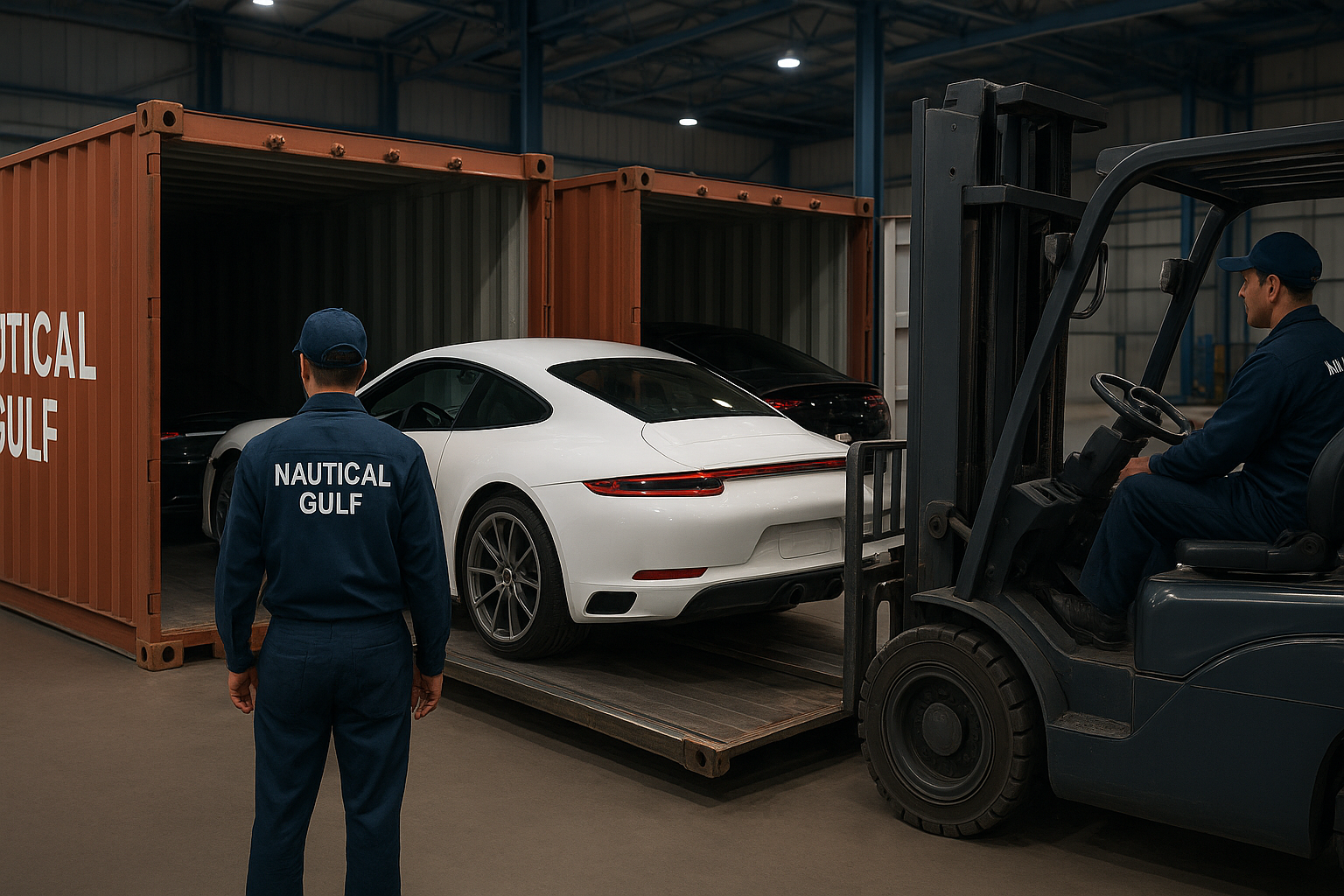
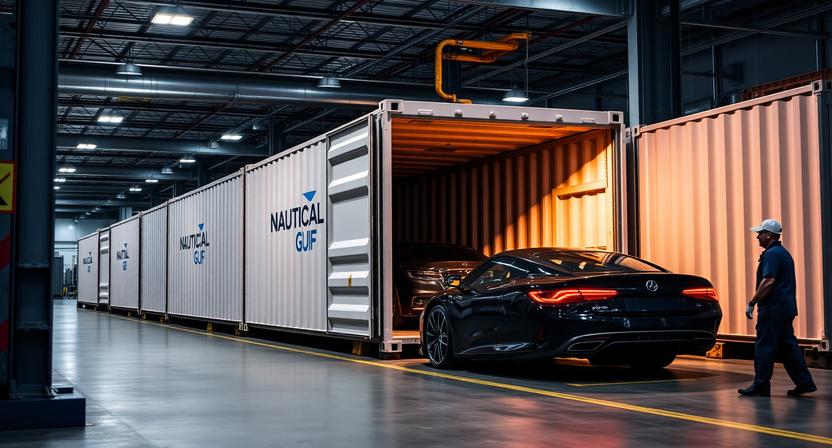
- Best For: Bulk commodities, heavy machinery, furniture, and car shipping from Dubai.
The most common question we receive at Nautical Gulf is about the “Price Gap.” In 2025, freight rates are influenced by fuel surcharges and global capacity.
| Metric | Air Freight (Express) | Sea Freight (LCL/FCL) |
| Pricing Model | Based on Chargeable Weight (kg) | Based on Volume (CBM) or Container |
| Average Cost | $4.00 – $8.00 per kg | $0.50 – $1.20 per kg (equivalent) |
| Minimum Charge | Usually 45kg – 100kg | Typically 1 CBM |
| Hidden Costs | Security & Fuel Surcharges | Terminal Handling & Port Fees |
Pro Tip: As a general rule of thumb, if your shipment is under 100kg, air freight may actually be cheaper once you factor in the high fixed costs of sea freight documentation and port handling.
When you choose a shipping and logistics company in Dubai, you are paying for peace of mind.
- Air Freight Security: Air cargo undergoes the most rigorous screening processes. Handling is minimal, significantly reducing the risk of theft or damage. Nautical Gulf recommends air freight for any items with a high “value-to-weight” ratio.
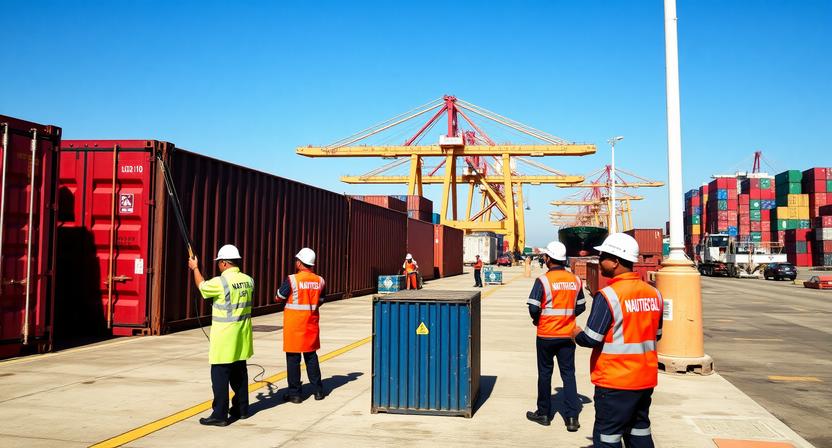
- Sea Freight Durability: While ocean freight involves more handling (cranes, trucks, transshipment), modern FCL (Full Container Load) shipping provides a secure, sealed environment for your goods.
In alignment with the UAE’s Net Zero 2050 goal, sustainability is now a core metric for any logistics company in Dubai UAE.
- Sea Freight is significantly more eco-friendly, producing a fraction of the $CO_2$ per tonne-kilometer compared to air.
- Air Freight is the “High Carbon” option, though 2025 has seen an increase in Sustainable Aviation Fuel (SAF) usage among major carriers like Emirates SkyCargo.
At Nautical Gulf, we help our clients decide based on four key variables:
- Urgency: Does it need to be there this week? Choose Air.
- Budget: Is the profit margin tight? Choose Sea.
- Cargo Type: Is it heavy/bulky? Choose Sea. Is it fragile/valuable? Choose Air.
- Destination: Is the destination landlocked? Choose a Multimodal Air-to-Land solution.
Whether you need the velocity of air or the volume of sea, Nautical Gulf offers:
- Digital Tracking: 24/7 visibility regardless of the transport mode.
- Customs Mastery: In-house brokerage to ensure neither air nor sea cargo is delayed at the border.
- Global Reach: Partnerships with 40+ international ports and airports.
The choice between air freight and sea freight in Dubai isn’t about which is “better”—it’s about which is “right” for your current business cycle. In 2025, the most successful companies are those that use a hybrid approach, moving urgent stock by air and bulk inventory by sea.
Ready to optimize your shipping strategy?
Consult with the experts at Nautical Gulf. Visit nauticalgulf.com or call us at +971524327383.
